Striking · throws · locks · groundwork

Japanese Jiu-Jitsuversus MMA

Japanese Jiu-Jitsu offers a broad traditional toolkit. MMA adds consistent cross-range sparring and pressure-tested transitions against resisting partners.

The honest comparison

Jiu-Jitsu or MMA?

Japanese Jiu-Jitsu can cover striking, throws, joint locks and groundwork, but emphasis and training intensity vary between schools. MMA uses a clearer sporting framework to test the same ranges together.

Where Jiu-Jitsu excels

A wide toolkit

Traditional Jiu-Jitsu develops breakfalls, close control and a large range of throws and locks, often with an explicit self-defence focus.

  • Standing locks, throws and restraints
  • Breakfalls and safe partner practice
  • Technical breadth and tradition

What MMA adds

Continuous resistance

Some traditional drills begin from agreed attacks. MMA places greater emphasis on live exchanges where striking, takedowns and groundwork flow without a preset response.

  • Regular sparring under clear rules
  • Reliable transitions between ranges
  • Feedback against unpredictable resistance

Choose by goal

Tradition or testing?

Choose Japanese Jiu-Jitsu for a broad traditional syllabus. Choose MMA when live performance across every range is the priority.

  • Jiu-Jitsu: breadth, locks and tradition
  • MMA: integration and live application
  • Our training draws value from both

Explore Japanese Jiu-Jitsu training

A complete martial-arts system

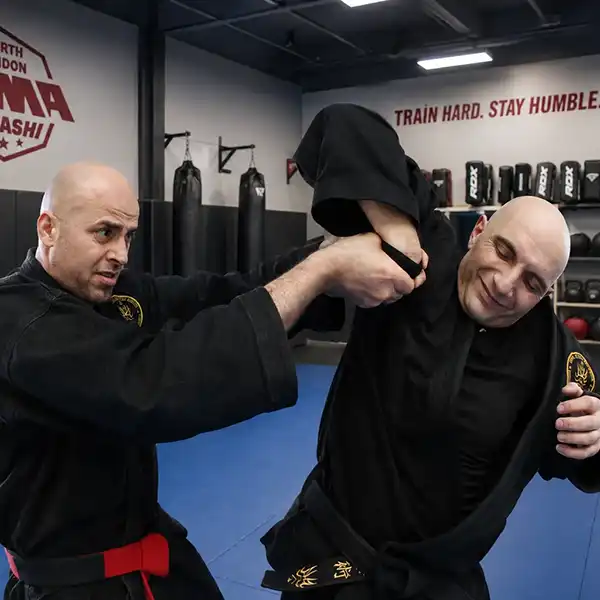
Japanese Jiu-Jitsu standing control technique

Connect stand-up and ground skills through a traditional system adapted for modern MMA and self-defence training.

  • Hand strikes, kicks and defensive movement
  • Throws, joint locks and restraint skills
  • Ground control and submission awareness
Try a free class

Throw with balance and timing

Japanese Jiu-Jitsu throw demonstrated safely

Learn to disrupt posture, move efficiently and turn close contact into a controlled throw or takedown.

  • Balance breaking and safe entries
  • Hip, leg and upper-body throwing actions
  • Breakfalls and responsible partner practice
Explore throwing skills

Control with locks and restraint

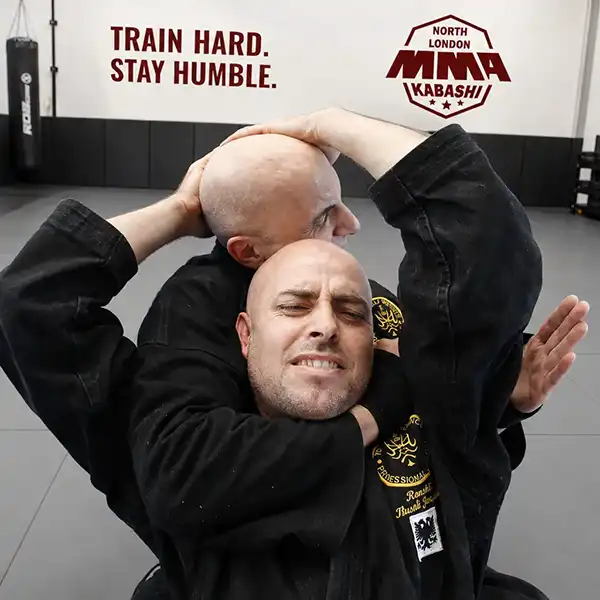
Controlled Japanese Jiu-Jitsu head-and-arm control training

Use leverage and positioning to manage limbs, escape grips and develop proportionate control without relying on size alone.

  • Wrist, elbow and shoulder controls
  • Releases from grabs and holds
  • Safe application and controlled release
Self-defence training

Add practical striking options

Students practising a controlled striking defence drill

Develop direct strikes alongside movement and cover so that striking connects naturally to clinch, throws and control.

  • Punches, palms, elbows and knees
  • Distance, timing and defensive posture
  • Transitions from striking to grappling
Explore striking skills

Link groundwork with BJJ

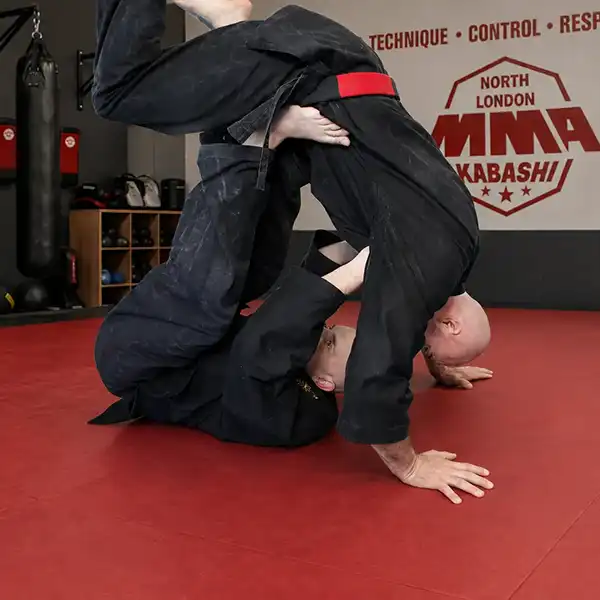
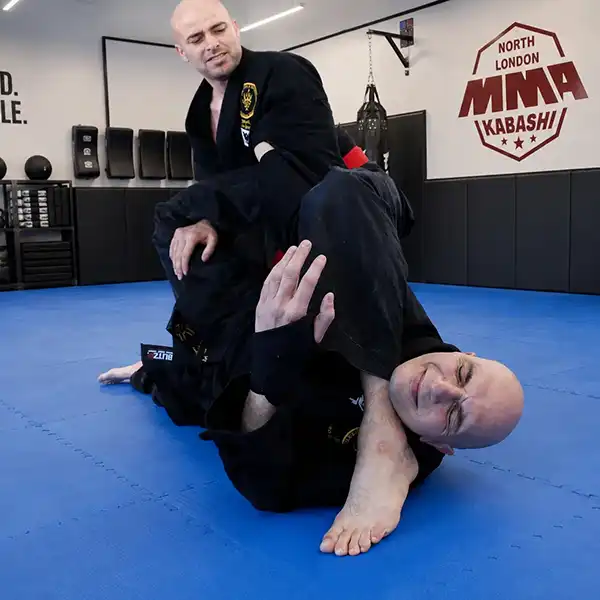
Japanese Jiu-Jitsu ground-control and lock training

Continue safely after a takedown with positional control, escapes and carefully supervised submission techniques.

  • Stable pins and ground positioning
  • Escapes and defensive movement
  • Links to Brazilian Jiu-Jitsu practice
Explore BJJ

Learn from experienced instruction

Jiu-Jitsu instructor Ibush Kabashi teaching a student

Chief instructor Ibush Kabashi is a 6th Dan Jiu-Jitsu instructor with extensive coaching and defensive-tactics experience.

  • Beginner to advanced technical coaching
  • Focused feedback and progressive practice
  • One-to-one and private-group options
Private Jiu-Jitsu

Start in Barnet

Your first adult class is free

Meet the instructor, experience the training and decide without pressure.

Book your free class