Awareness · direct action · control · escape

Krav Magaversus MMA

Krav Maga prioritises awareness, rapid decisions and escape from threatening situations. MMA provides deeper live practice in striking and grappling against resistance.

The honest comparison

Krav Maga or MMA?

The two systems solve different problems. Krav Maga is organised around personal safety and escape; MMA is a combat sport whose training methods develop reliable one-to-one fighting skill.

Where Krav Maga excels

Context and escape

Good Krav Maga training starts before the physical exchange and keeps avoidance, verbal boundaries and escape central.

  • Situational awareness and decision-making
  • Common grabs and scenario practice
  • A clear objective: reach safety

What MMA adds

Depth under pressure

Krav Maga quality and resistance levels vary between schools. MMA offers a well-established structure for testing striking and grappling against an actively resisting partner.

  • Regular live sparring and rolling
  • Deep striking, wrestling and BJJ skills
  • Honest feedback on timing and control

Choose by goal

Safety context or combat depth?

Choose Krav Maga for scenario-led personal safety. Choose MMA for more technical depth and continuous resistance, then apply that foundation with sensible self-defence principles.

  • Krav Maga: awareness and escape context
  • MMA: stronger live combat testing
  • Together they can complement each other

Explore Krav Maga concepts

Simple, direct defensive actions

Students practising a direct self-defence response

Practise straightforward movements that can be understood quickly, repeated safely and connected to a clear opportunity to escape.

  • Protect, respond and move decisively
  • Gross-motor actions under pressure
  • Progressive drills for beginners and improvers
Try a free class

Use awareness before physical action

Instructor explaining safe positioning and awareness

Learn to recognise developing risk, maintain useful distance and choose avoidance or disengagement whenever possible.

  • Situational awareness and early decisions
  • Protective posture and verbal boundaries
  • Movement towards safer space and escape
Self-defence training

Create space with direct striking

Controlled practical striking and defence drill

Use simple punches, palms, elbows and knees with movement designed to interrupt pressure and create a route away.

  • Direct hand strikes and compact combinations
  • Close-range knees and elbow awareness
  • Immediate movement after each response
Explore striking skills

Escape grabs and close control

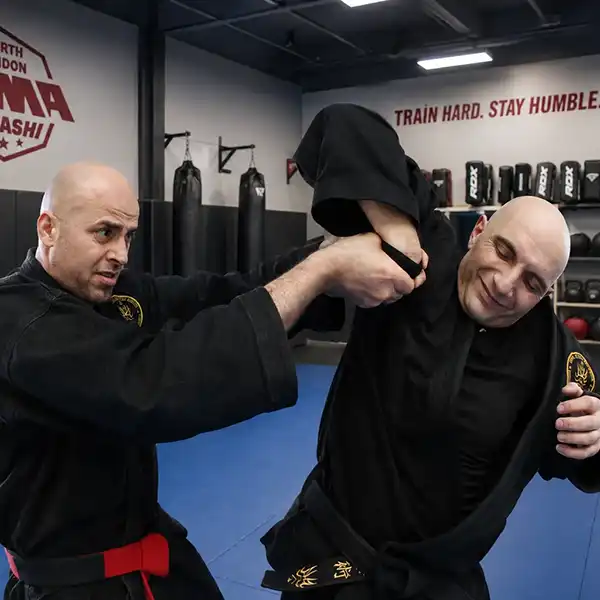
Practising a controlled release from a wrist grab

Combine leverage, posture and immediate movement to release common grips and manage close-range physical pressure.

  • Releases from wrist and clothing grabs
  • Frames, posture and balance recovery
  • Links to locks, takedowns and disengagement
Explore Jiu-Jitsu

Recover safely from the ground

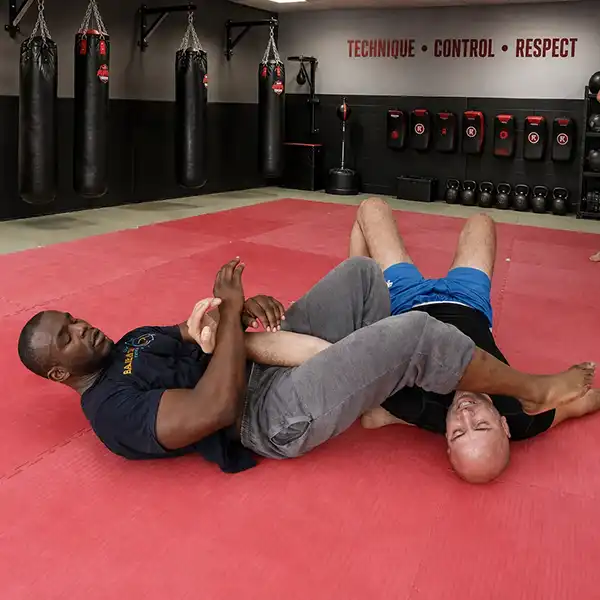
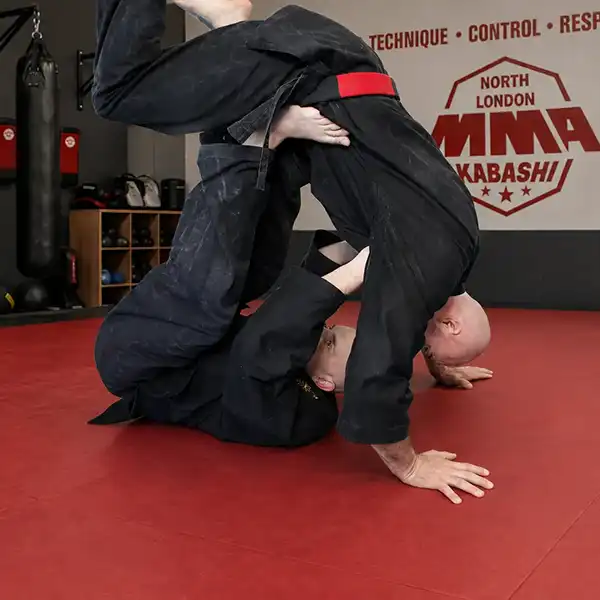
Students practising defensive ground movement

Build the composure and technical base needed to protect yourself, make space and work back towards a safer position.

  • Protective ground posture and movement
  • Escapes from pressure and common holds
  • Technical stand-up and disengagement
Explore BJJ

Train scenarios with focused coaching

Focused self-defence and takedown coaching

Use private tuition to concentrate on relevant situations, build confidence and develop responses at an appropriate pace.

  • Individual needs and risk-context discussion
  • Progressive pressure and scenario practice
  • One-to-one or private small-group options
Private self-defence

Start in Barnet

Your first adult class is free

Meet the instructor, experience the training and decide without pressure.

Book your free class